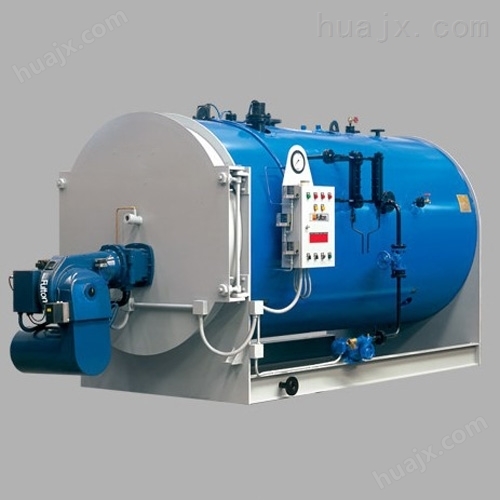
Product Overview
The series of gas hot water boilers features safety, reliability, high efficiency, energy conservation and environmental protection, easy maintenance, durability, and fully automatic intelligent control; All have undergone energy efficiency testing by the Thermal Energy Testing Center of the Special Inspection Institute, and all performance indicators are higher than the design requirements.
Product Introduction
The series of gas hot water boilers features safety, reliability, high efficiency, energy conservation and environmental protection, easy maintenance, durability, and fully automatic intelligent control; All performance indicators have been tested for energy efficiency by the Thermal Energy Testing Center of the Special Inspection Institute and are higher than the design requirements.
Boiler manufacturing process
The key processing techniques such as steel plate cutting, ring rounding, and tube plate drilling all adopt advanced CNC machining technology to reduce assembly stress and extend the service life of the boiler.
The front and rear smoke box panels are cut using a CNC plasma cutting machine, which is neat and beautiful.
Boiler welding process
The longitudinal and circumferential seams of the boiler are welded using advanced submerged arc automatic welding technology to ensure welding quality. All longitudinal and circumferential seam welds undergo 100% radiographic testing.
The welding between the smoke tube and the tube sheet adopts the welding process of pre expansion to eliminate the gap between the tube and the tube sheet, and then uses argon arc automatic welding. Effectively eliminate stress and extend the service life of boilers.
Furnace body insulation
High quality aluminum silicate fibers are used, and refractory mud is used for insulation. The furnace temperature is controlled below 45 ℃, effectively controlling heat loss.
The front and rear smoke boxes are filled with multiple layers of aluminum silicate fibers, and then insulated with high-temperature refractory mud to increase thermal resistance, effectively reducing heat loss and improving thermal efficiency.